
Insights from Radical.
Field notes on hiring AI talent, the human side of automation, and what European scale-ups are learning along the way.

How do you compare to similar companies?
Everyone wants to know whether they are behind. Here are the actual Dutch figures by company size, and the one number in them that should change what you do next.

Your first AI hire: who to hire, and when
We place AI professionals, so we have an obvious interest here. Which is why it is worth saying plainly: most companies asking us for their first AI hire should not make one yet.

Build it yourself, buy it, or do it together?
We are a party you could hire for this, so treat what follows accordingly. That said: for most AI opportunities in a mid-sized company, buying something standard is the right answer, and we will say so.

The AI Act and your suppliers: what to watch for in the contract
The most expensive misunderstanding in AI procurement is assuming that buying the tool means buying the compliance with it. It does not. The obligations follow the use, and the use is yours.

What belongs in an AI roadmap for the boardroom
Most AI plans presented to a board fail for the same reason: they answer questions the board did not ask, and skip the three it will actually ask. This is the table of contents we deliver.

Getting your data in order before you let AI agents loose on it
Every AI project eventually hits the data question, and the usual answer is a migration nobody wants to pay for. There is a cheaper answer: leave the systems alone and describe what the data means.

Setting an AI strategy without a CTO of your own
Read any article on AI strategy and count how quickly it assumes a CTO, a data team, and a governance board. For a company of eighty people none of that exists, and the advice quietly stops applying.

Who is liable when AI makes a mistake?
Every director asks this question and almost no supplier answers it. The short version: liability does not disappear because a machine was involved. It lands on a person, and you get to influence which one.

Working out your AI position without bringing in a consultant
We sell AI readiness work, and this page tells you how to do a large part of it yourself. That is deliberate. If you can do it alone, you were never going to be a client. If you try and get stuck, you will know exactly where.
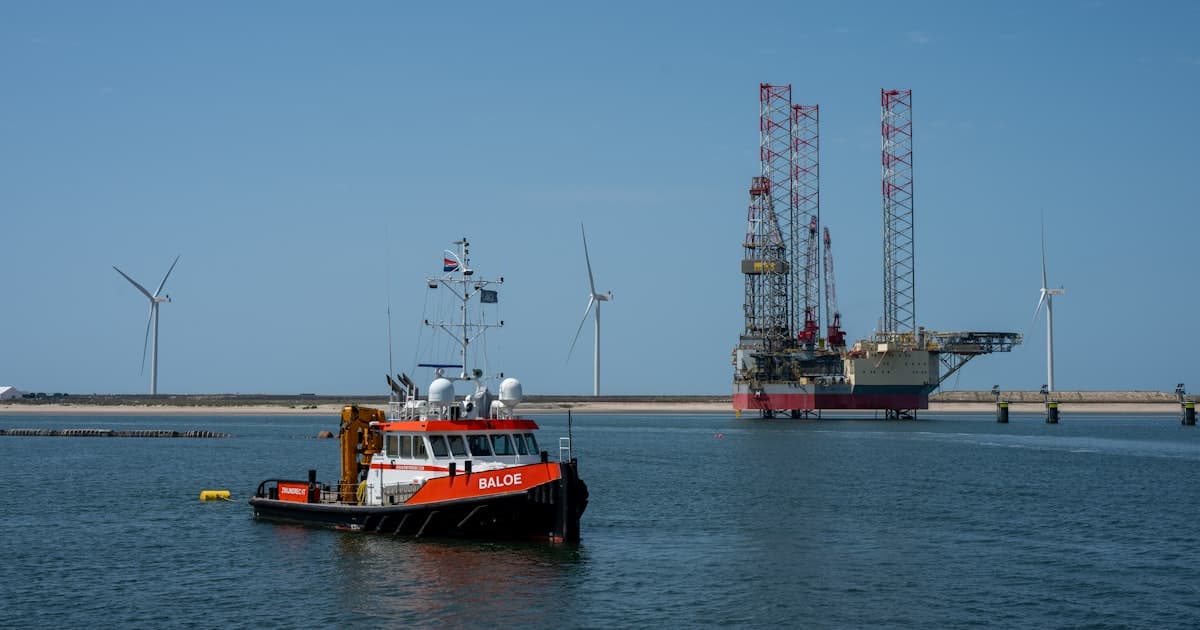
AI in offshore: a small sector where one order pays for everything
Offshore is the smallest of the sectors we write about, by a wide margin. That is exactly why it is worth writing about: when a single order runs into the millions, a percentage point of planning improvement is not a rounding error.

How to anchor AI knowledge so it does not leave with one person
Almost every business we visit has one person who figured out AI on their own. That is a good start and a serious risk at the same time. The question nobody asks in time: what happens the week after they hand in their notice?

Building an AI roadmap: from experiment to production
Most roadmaps we see are a ranked wish list with a timeline drawn over it afterward. A roadmap that actually gets built looks different: it names one thing to start, what proves it works, and what happens only after that proof exists.
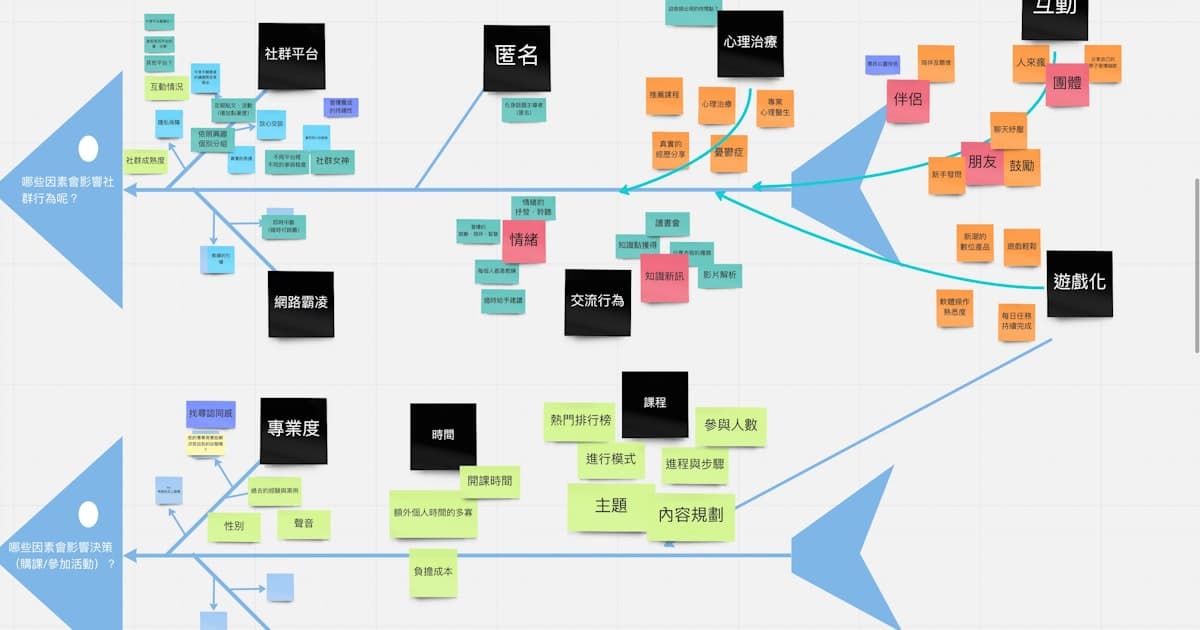
The AI Act's risk tiers, explained without the legal jargon
Almost every AI Act explainer starts with the obligations. That is the wrong order. The Act first sorts a system into one of four risk tiers, and only then attaches rules. Skip that first step and you are reading rules that may not even apply to you.

The priority matrix: choosing among ten AI opportunities
The boring, high-feasibility opportunity usually loses the conversation to the ambitious one. It should not. How to rank AI ideas honestly.

AI in construction: where the money is
Every project is unique, unlike a repeatable delivery route. Where AI pays off in construction: estimating, coordination and site documentation.

Why an advisory report is not capability
After an advisory process you have a document and an invoice. After building it yourself, you have people who know why the system works.
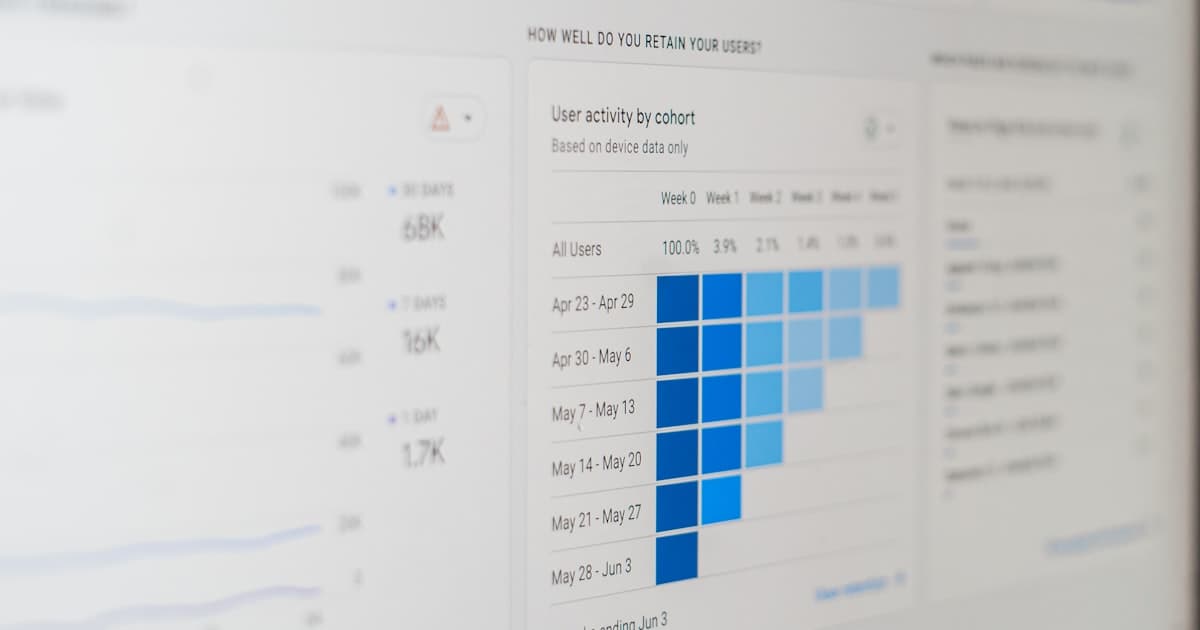
Why AI pilots run aground before reaching production
Experimenting is nearly universal. Reaching production is rare. RAND's research on 65 data scientists explains why, and what a pilot has to prove first.

AI Act checklist for the board
No explanation of the regulation, just the list. Twelve points in the order they should be done, with the deadline that applies to each and an honest note on which ones most companies have not started.

From AI Photo to roadmap: what happens in ten days
"How much time does this cost me" is the first question every director asks. Here is the exact, day-by-day answer.
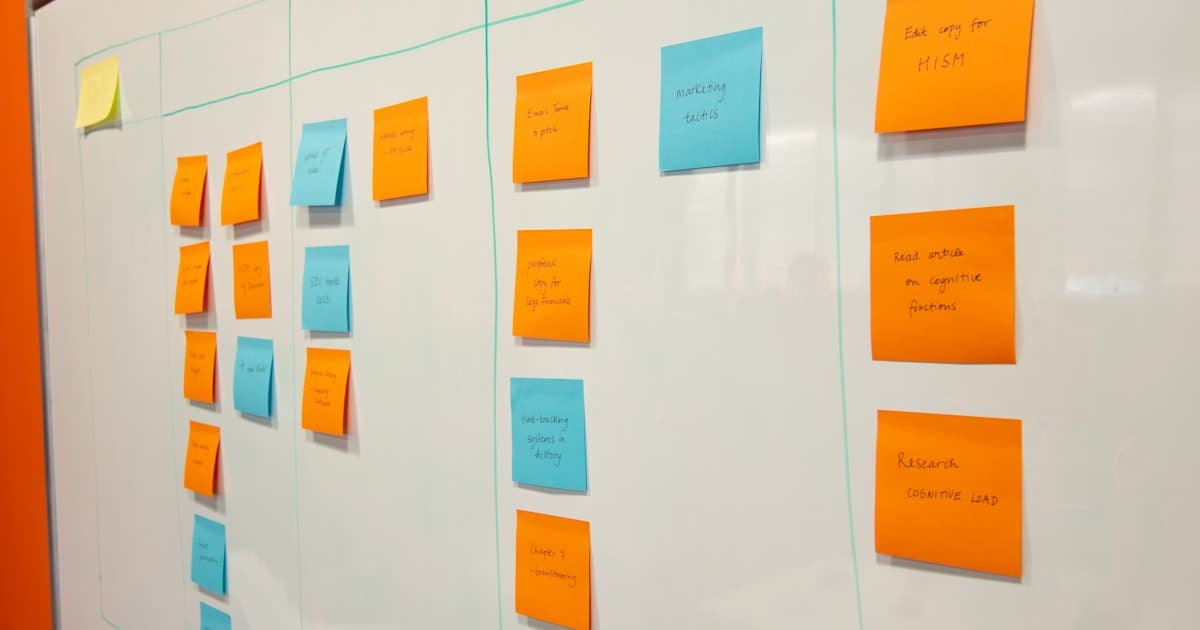
AI in operations planning
Planning has the biggest gap between large and small companies of any AI use case. The fix is not automation, it is a model that proposes and a planner who decides.

The Radical Manifesto: AI Recruitment, Done Right
AI is everywhere. The human factor is rare. The Radical manifesto explains who we are, why we built APAC, and why selection is the product.

Getting more out of the people you already have
The goal is not to replace anyone. It is to take repetitive work off people's plates, in a labour market where you would not find the people you are missing anyway.

Calculating AI ROI on your own figures
1,200 hours, 68,000 euro, three months payback: our own illustrative example, rebuilt as a model with your own numbers in it.

Drafting an AI policy: a framework you can use today
Two pages get read. Twenty get filed. A fill-in template for what is allowed, what needs a human, and who to call in doubt.

Why an AI scan is not an IT project
AI sounds like technology, so it goes to IT. That reasoning is intuitive and wrong, for the same reason marketing strategy does not belong there either.

AI in wholesale trade: where the money is
No new systems, just better use of what the ERP already holds. Stock, purchasing and margin, in order of how fast each pays back.

Building AI capacity without your own AI team
No data scientist, no ML engineer, and that is normal. The role you need already exists in your company, it just has a different job title.

What AI really costs, and the budget nobody plans for
A licence of six hundred euro a month against twenty-eight thousand in staff hours. The ratio nobody puts in a business case, and how to budget it yourself.

AI literacy for staff: the obligation nobody knows about
No exam, no certificate, and it applies to agency workers too. Since July it is an obligation of effort rather than result, and you already run the process for something else.

Five signals that your AI ambition is stalling on your organisation
Cost is named by 3 per cent as the reason for not using AI. Lack of experience inside the company by 11 per cent. Here is what that looks like on your own floor.
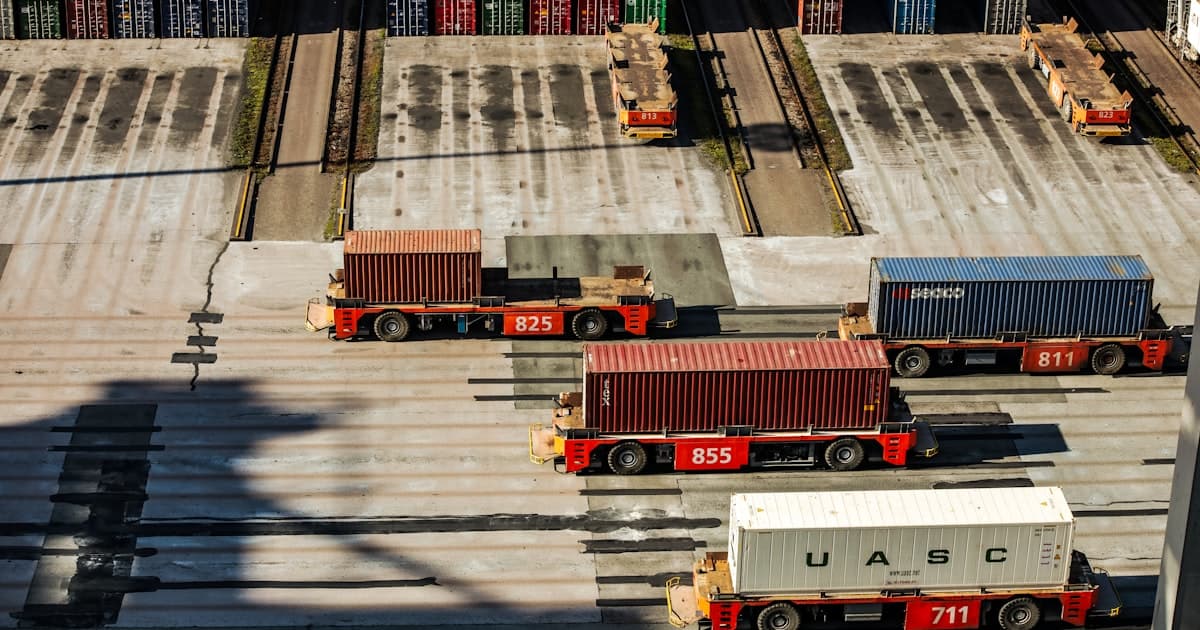
AI in logistics: where the money is for a mid-sized transport company
One in four kilometres empty, 15,200 vacancies and four data sources nobody joined up. Where AI actually pays back in logistics, in order of feasibility.

What can AI actually do for my company?
The honest answer starts with your processes, not with the technology. Five concrete first applications from five sectors, and the three tests that separate them from a good demo.

From how many employees does the EU AI Act apply?
No article says you are exempt below fifty or two hundred and fifty people. Size counts in exactly three places, and none of them is an exemption.

Why AI projects run aground in mid-sized companies
They do not crash. They go quiet. Five places an AI project runs aground in a mid-sized company, and why more technology fixes none of them.
How do you know whether your organisation is ready for AI?
Ready for AI sounds like a state you reach. It is four separate readinesses, and the one that stops most companies has nothing to do with technology.

What does an AI implementation cost in a mid-sized company?
Almost nobody in this market names a number. Here are ours, the four cost items behind any quote, and the reason the biggest one never appears on the invoice.

The EU AI Act for mid-sized companies: what you need in place now
One part of the AI Act starts to bite on 2 August 2026. The part most companies feared was postponed by seventeen months, one week ago. Here is the difference.

What APAC Measures (and Why CVs Miss It)
A CV is a record of the past. APAC measures the four human qualities that decide whether an AI professional will thrive in a real team: Adaptability, Personality, Awareness, Connection.

Tech Sovereignty in AI Recruitment: Why Portability Beats EU-Hosted
Hosting in the EU is a sensible default today, not a guarantee of sovereignty tomorrow. Real sovereignty is portability, on open standards, on every layer of the stack.
Community-Driven Recruitment: Why the Best AI Engineers Don't Apply
Senior AI engineers do not browse job boards. They ship, contribute, mentor, and learn in communities. This is why hiring through reputation beats hiring through ads.
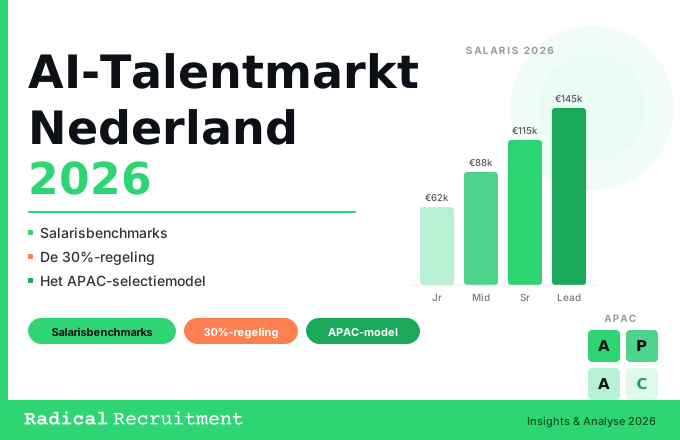
[Translation pending] AI Talent Market Netherlands 2026: Salary Benchmarks & the 30% Ruling
English translation pending. This article is currently only available in Dutch.

The Reality of the European AI Talent Market in 2026
AI talent is now 0.41% of the EU workforce while demand keeps climbing. What that scarcity does to salaries, why keyword screening misses 40% of viable candidates, and how to hire and keep engineers under the EU AI Act.