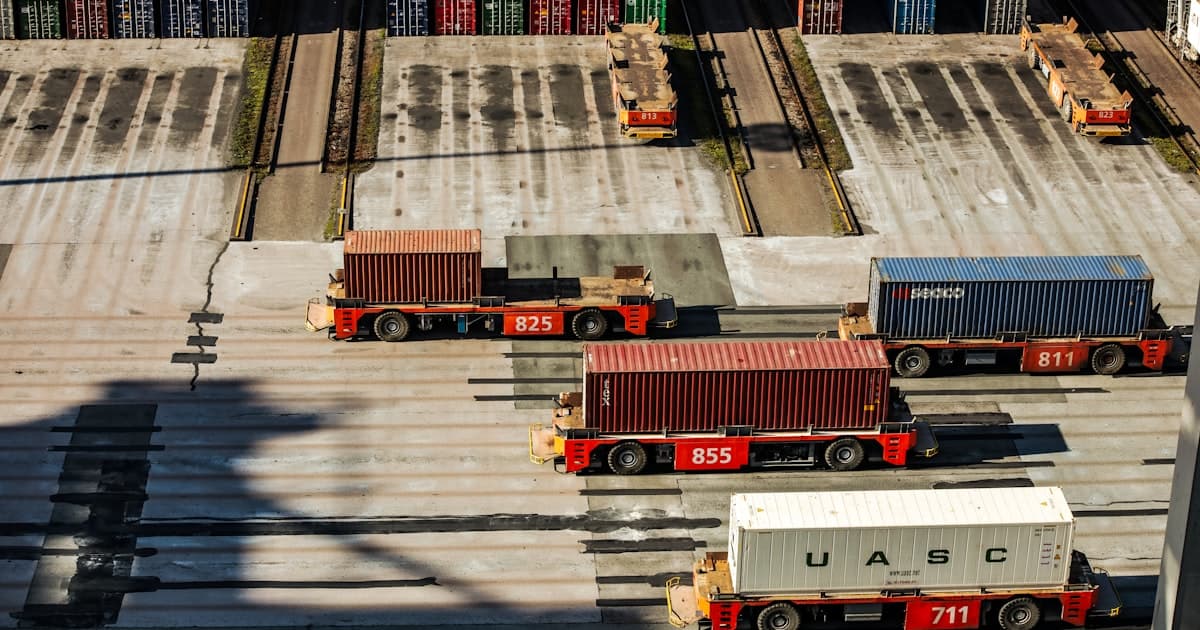
AI in wholesale trade: where the money is
No new systems, just better use of what the ERP already holds. Stock, purchasing and margin, in order of how fast each pays back.
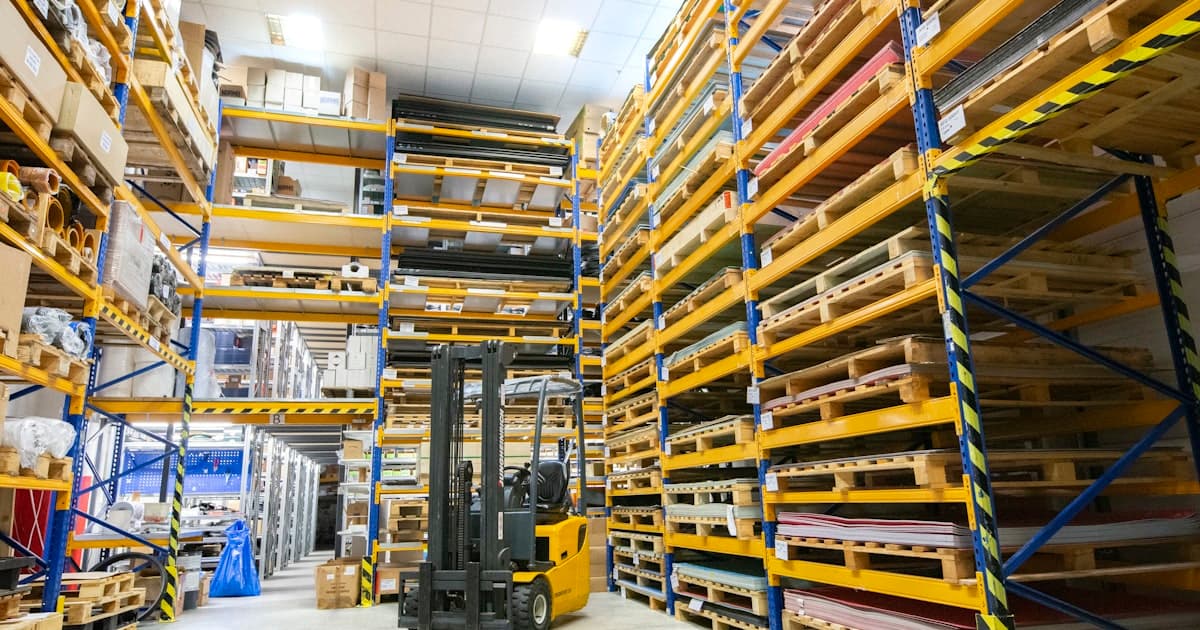
Dutch wholesale trade counts nearly 66,000 companies, and of that group just over 1,575 have fifty or more employees. Among companies in the broader trade sector with 50 to 250 staff, 47 per cent use AI. That is almost as much as the rest of the economy, and yet there is barely any content specifically about wholesale trade.
That is strange, because no sector has its data more completely ready. A wholesaler runs on an ERP system where every purchase, every sale, every stock movement and every margin has already been recorded, often for years. So the argument here is not new systems. It is making better use of what is already there.
Why wholesale is a different sector from logistics
We wrote earlier about AI in logistics, and it is tempting to lump the two together. That would be a mistake. A transport company earns on kilometres and hours. A wholesaler earns on margin on a product someone else makes and that you do not change yourself.
That difference decides where the gains are. In transport it is about load factor and planning. In wholesale it is about three things that all touch money before a truck is even involved: what you buy, what you charge for it, and what stays sitting in the warehouse.
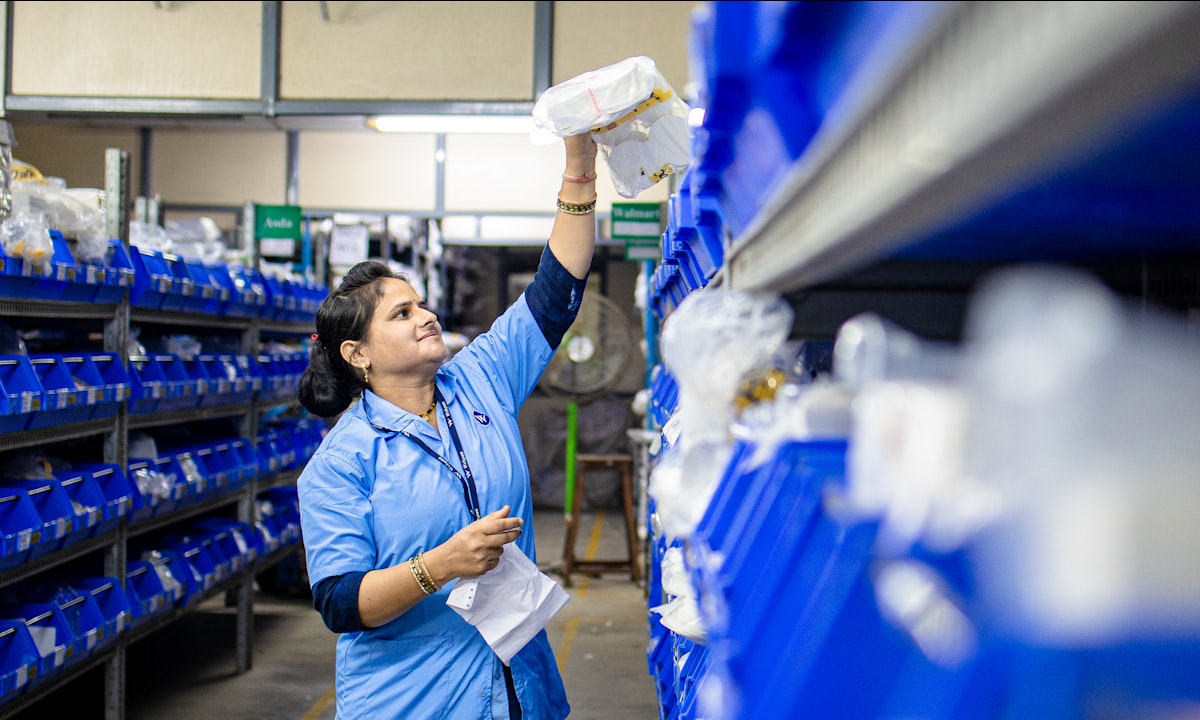 Picking an item off a shelf. Stock is the largest and most underestimated place the money sits.
The three places the money is
Stock. The largest and the most underestimated. A wholesaler with a broad range almost always has items sitting too long and items running out too often. A forecast based on your own sales history, per item and per season, is not an exotic application. It is statistics on data you already have, and in practice it frees up capital tied up in the wrong stock and recovers revenue lost to an empty shelf.
Purchasing and price negotiation. Anyone buying from dozens of suppliers rarely has an overview of which supplier genuinely offers the best price for which item, because that overview has to be kept by hand and therefore usually is not. A system that lines up purchase prices, including discount tiers and lead times, is one of the few applications that pays back in months rather than quarters.
Quotes and margin. A salesperson putting together a quote often picks a margin on instinct, and that instinct is not consistent everywhere. An overview of what margin is customary for which type of customer and order prevents both giving away margin and losing an order to too high a price.
The sum you can do yourself
Take your own stock value. Say a wholesaler with two million euro in stock, part of which structurally turns over too slowly. Industry figures on what percentage of average stock is "dead" vary too much to quote a national number here, so calculate with your own turnover rate per product group.
What does hold everywhere: every percentage point of improvement in stock turnover is directly freed working capital, not extra revenue still to be sold. On two million euro in stock, one per cent is 20,000 euro no longer sitting on a shelf. That is why stock forecasting is more often the first application in this sector than in most others.
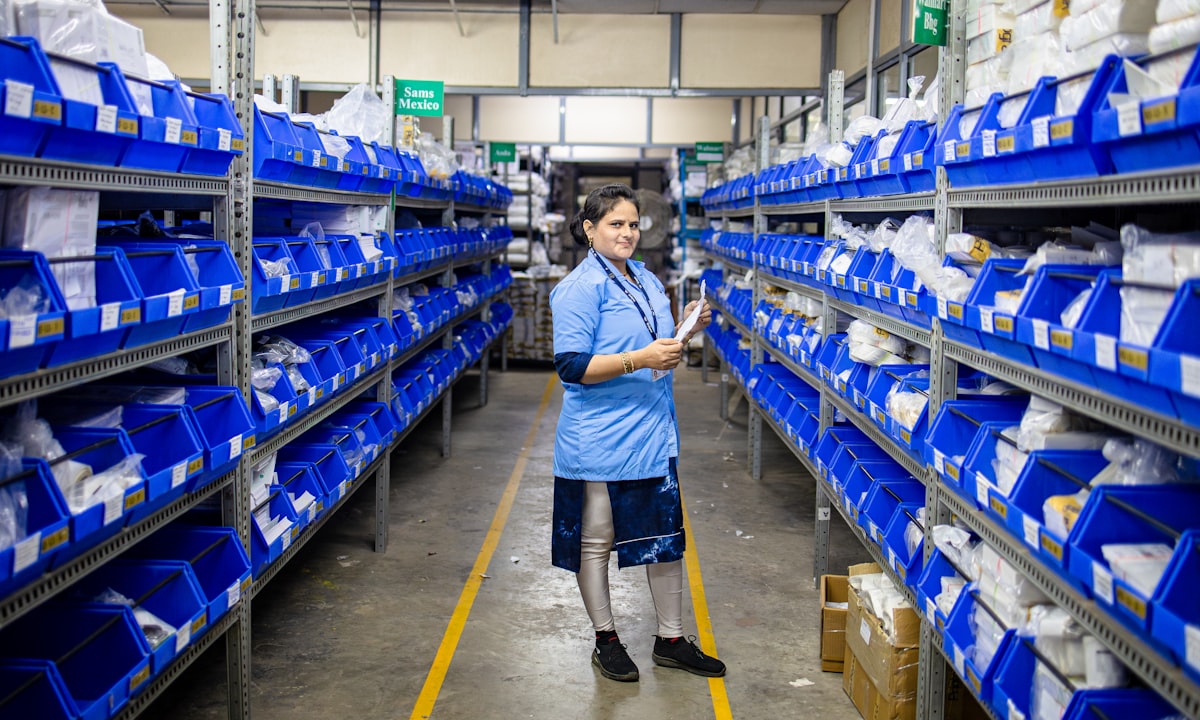 A warehouse full of supplies. Every point of improved turnover is capital freed, not revenue still to sell.
What you already have
Almost every wholesaler this size has three sources rarely joined up.
The ERP holds every purchase and sales transaction, usually for five years or more. The webshop or order portal holds what customers search for and do not find, often more valuable than what they do buy. And the field and inside sales teams hold knowledge that exists nowhere else: which customer asked last month for something you did not have in stock, which supplier always delivers two days late.
That third source is the hardest to digitise and the most valuable to use. A weekly quarter-hour where inside sales records what customers missed is cheaper than any AI system and often produces the first signal a forecast can be built on.
Four applications, in order of feasibility
| Application | Data you already have | Who checks the output |
|---|---|---|
| Stock forecasting per item | Sales history from the ERP | Purchasing, weekly |
| Comparing purchase prices | Supplier invoices and quotes | Purchasing, per order |
| Margin advice on quotes | Historical orders and margins | Sales, per quote |
| Flagging demand you could not supply | Webshop search behaviour, inside sales notes | Purchasing and sales together |
Start at the top. Stock forecasting is the application whose output is easiest to check: within a month you know whether the forecast was right, because actual sales prove it.
Four questions for any stock-forecasting vendor
There is now a substantial supply of ready-made stock forecasters, and not all of them suit a wholesaler with a broad and shifting range. Four questions filter out most of them.
Does it work as well on seasonal items as on steady-turnover items? Many standard models are trained on stable demand and perform poorly on a range with peaks, like garden products in spring or decorations around the holidays.
Can it use a different sensitivity per product group? A wholesaler rarely has one pattern. Building materials move differently from office supplies, and a system running one model over everything misses both.
What happens when a supplier falls through? Ask explicitly whether the system proposes an alternative or only flags a shortage. The difference decides whether you get a warning or a solution.
Can we override the forecast ourselves, and does that override stay visible? A buyer who knows a large customer is placing a peak order next month has to be able to enter that without the model "correcting" it away. A system that ignores or hides that override becomes unreliable over time, because nobody knows anymore which forecast came from the model and which from a person.
Who picks this up in practice
Most wholesalers this size have no separate data department, and none needs to appear. What is needed: someone from purchasing who knows the product groups and is willing to spend a few hours a week judging forecasts against what actually happened.
That role is similar to what we described in our piece on building capacity without your own AI team: not a new job, but an existing role with a few extra hours and access to someone who can explain why a forecast went wrong. At a wholesaler that is almost always someone in purchasing, because that person already looks at stock every week anyway.
Where it goes wrong
The model learns the wrong season. A wholesaler with strong seasonal patterns, think garden products or party supplies, needs at least two full annual cycles of data to recognise the pattern. Less than that and the model mostly learns the one year that happened to be available.
Stock gets optimised without looking at the customer. A model that only looks at turnover sometimes advises phasing out an item that is essential for one large customer. Revenue and relationship do not automatically count in a stock model, so that judgment stays human work.
Purchasing gets fully automated. A system that places orders on its own based on a forecast is tempting and risky at once. Have a human see every automatic order before it goes out for the first few months, exactly the principle of human on the loop.
What the webshop tells you that the ERP does not
There is one data source wholesalers systematically underuse, and it is not the ERP but the webshop or B2B order portal. The ERP records what was sold. The webshop also records what was searched for and not found, what landed in a cart and was then removed, and how long someone stayed on a product page before giving up.
That is a different kind of signal from sales history, and it arrives earlier. An item searched for over three months before it sells out gives a warning your sales figures do not yet show, because those only count once something has actually sold. For a wholesaler with a webshop, this is often the cheapest extension to a stock forecast: no new system, just a data source that is already running and not yet being used.
The AI Act barely touches wholesale
This is good news and worth stating explicitly, since other sector pieces on this site often carry a warning. Stock forecasting, purchase comparison and margin advice are none of them high-risk applications under the AI Act. They fall in the category where no special obligation applies, as long as you do not use customers' or employees' personal data to make individual assessments with it.
Where it does start to matter is if a wholesaler itself recruits staff using AI, or if a customer-scoring system starts using individual buying behaviour to make credit decisions. The latter touches financial services and has its own framework. For the three applications in this piece, Article 4 is what applies most: make sure the people working with the system know what it does and what it does not.
What a first quarter looks like
Pick one product group, not the whole range. Ask purchasing which group should be the most predictable and currently is the least, usually a category with many items and a clear seasonal pattern. Build a forecast on the existing sales data, run it alongside the current way of ordering, and measure the difference in turnover after two months.
Only then, with a team that knows where such a model gets stuck, move to purchase prices or margin advice. Those two need more consultation with people outside the system, and that works better once the first application has already built trust.
About this page
The company count and size-class breakdown come from Statistics Netherlands open data, table 81589NED, as of the third quarter of 2026. The AI-use percentage comes from table 86119NED over 2025 and concerns the broader trade sector, not wholesale specifically; a separate wholesale breakdown does not exist in the CBS data. This is the state of play on 14 August 2026.
Frequently asked questions
Sources
Tell us what you need.
We respond within 24 hours, from a real human.
Get in touch