AI in offshore: a small sector where one order pays for everything
Offshore is the smallest of the sectors we write about, by a wide margin. That is exactly why it is worth writing about: when a single order runs into the millions, a percentage point of planning improvement is not a rounding error.
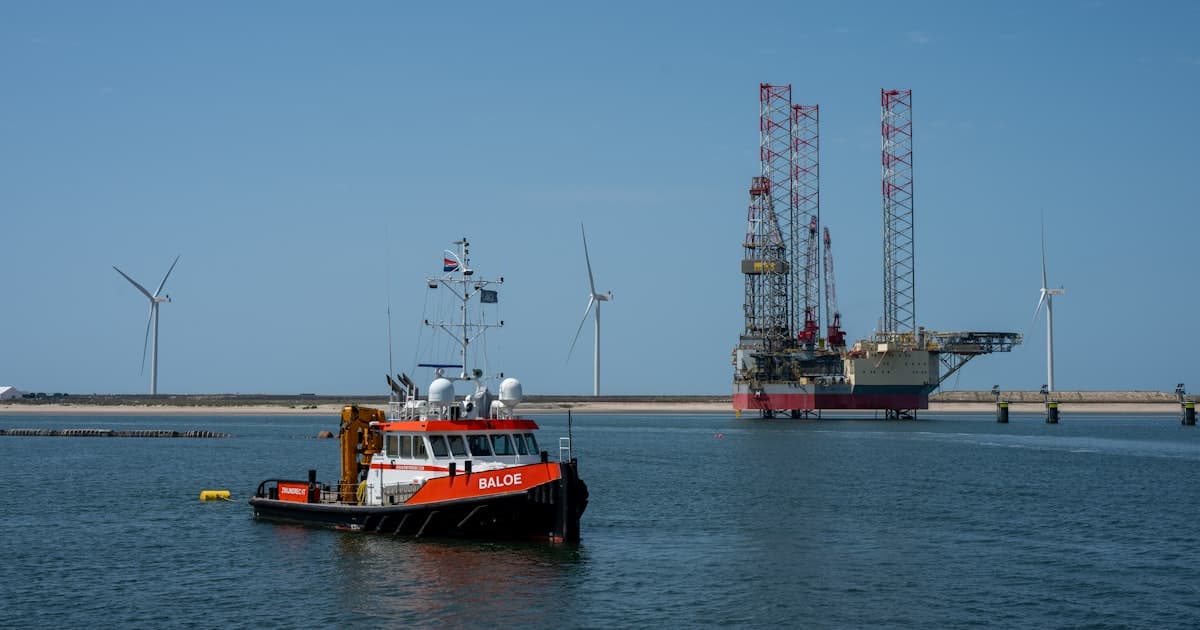
Offshore is a strange sector to write about commercially. There are very few companies, they are hard to reach, and almost nobody searches for "AI offshore" in Dutch. By the usual logic of content, this page should not exist.
It exists because the usual logic is wrong here. In a sector where one contract can run into eight figures and one unplanned day of downtime costs more than a year of software, the relevant question is not how many people read this. It is whether one of them recognises their own operation in it.
How small the sector actually is
We checked rather than guessed. Taking the three CBS business categories closest to offshore work, as of the third quarter of 2026:
| Category (SBI) | Companies | Under 50 staff | 50 or more staff |
|---|---|---|---|
| Dienstverlening delfstoffenwinning (09) | 460 | 440 | 15 |
| Zee- en kustvaart (501-502) | 675 | 645 | 30 |
| Dienstverlening voor de scheepvaart (5222) | 2,350 | 2,340 | 10 |
| Total | 3,485 | 3,425 | 55 |
CBS rounds these counts to the nearest five, so read them as orders of magnitude rather than exact headcounts. The shape is unambiguous either way: around 3,485 companies in total, of which roughly 55 have fifty or more people. That is a tiny addressable market by any normal standard.
Compare that to the sectors we covered earlier. Construction has 269,845 companies. Offshore has less than two percent of that. If you were ranking sectors by volume, offshore would come last on the list every time.
Ranking by what a single customer is worth produces the opposite order. That is the whole argument for this page.
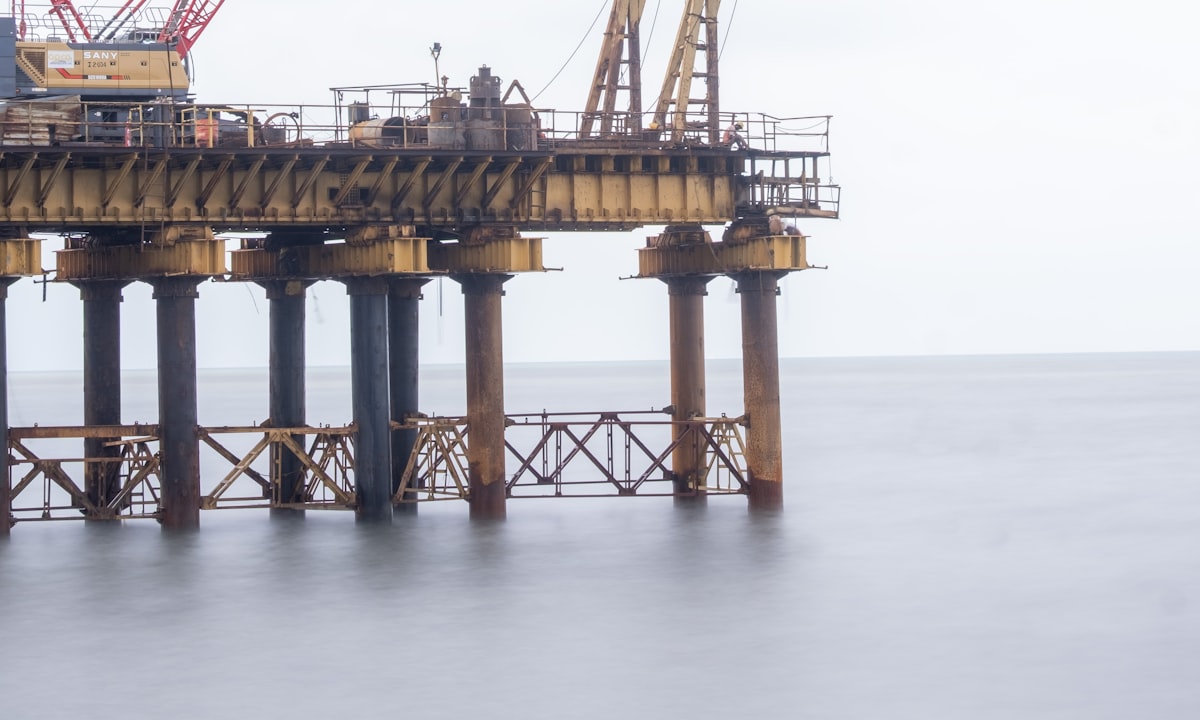 A crane on an offshore rig. An unplanned stop offshore costs more per hour than almost anywhere on land.
Where AI actually pays back offshore
Three areas, in descending order of how often we see them matter.
Maintenance timing. Offshore assets are expensive to reach. A technician does not simply drive over; there is a vessel, a weather window, and a crew. That changes the economics of maintenance completely. On land, doing maintenance slightly too early is a minor waste. Offshore, doing it slightly too early means an entire mobilisation you did not need, and doing it slightly too late means an unplanned mobilisation at short notice, which costs several times more.
This is the classic case where a model that predicts remaining useful life earns its keep, not because the prediction is impressive, but because the gap between the cost of being early and the cost of being late is enormous. The value is not in the model, it is in the asymmetry it is applied to.
Weather-window planning. Almost every offshore activity is constrained by sea state and wind. The planning problem is not "what is the optimal sequence of work" but "what is the optimal sequence given that the window may close and I will not know until tomorrow." That is planning under uncertainty, and it is genuinely hard for a human planner to do well across many simultaneous constraints. It is also exactly the problem class where AI planning support has a track record, provided the constraints are written down somewhere machine-readable, which in most companies they are not.
Compliance documentation. Offshore work generates a large amount of certification, inspection and reporting paperwork, much of it repetitive and much of it drafted from scratch each time by someone expensive. Drafting support here is unglamorous and one of the fastest returns available, precisely because nobody has ever tried to optimise it.
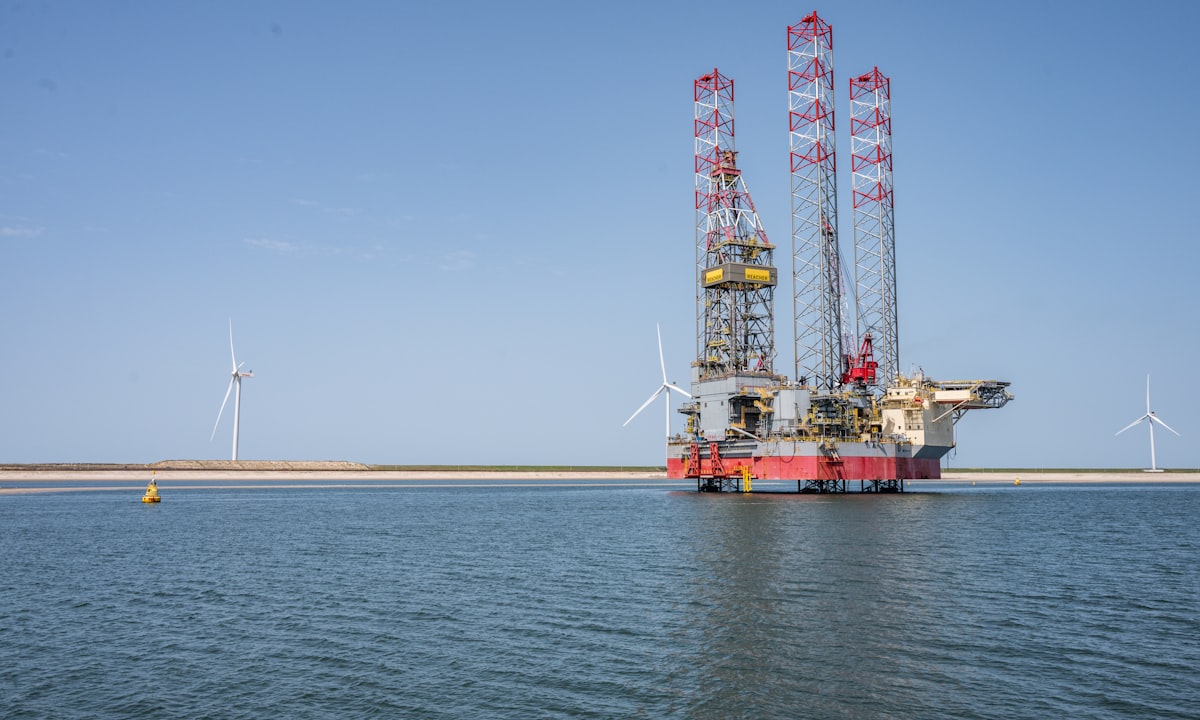 An installation vessel at a wind farm. Weather windows make offshore planning a scheduling problem under uncertainty.
The constraint that outranks all three
None of the above works if the underlying data is not there. Offshore companies typically have decades of maintenance history, but it sits in a mix of a maintenance system, spreadsheets kept by one planner, PDFs from a certifying body, and the memory of a superintendent who has been there twenty years. That last category is not a joke; it is often the highest-quality data source in the company and it is entirely undocumented.
That is the same key-person problem covered in Hoe je AI-kennis verankert, except offshore it is usually decades deep rather than months. Any serious AI work in this sector starts with getting that knowledge into a form a system can use, and that is a longer project than the modelling that follows it.
What the AI Act means here
Straightforwardly: for most of the applications above, not much. Predictive maintenance on equipment, weather-window planning, and drafting inspection reports are not on the Annex III high-risk list, and they are not prohibited practices. They mostly land in minimal risk, with Article 50 transparency applying if a tool talks to people directly.
One genuine exception is worth flagging rather than glossing over: AI that forms part of a safety component in equipment requiring third-party certification falls under Annex I, and offshore has plenty of equipment in that category. If the model is advising a planner, that is one thing. If it is inside a system that decides whether a lift is safe to proceed, that is a different regime, with a compliance date of 2 August 2028. Which of the two you are building is worth establishing before you build it, not after.
Why we wrote this anyway
The honest answer is the one at the top. This page will get a fraction of the traffic of the logistics or construction pieces, and that is fine, because a single offshore operator recognising their own maintenance-timing problem in the paragraph above is worth more than a hundred readers who were browsing.
If that describes you, the useful next step is not a tool demo. It is establishing what your maintenance history actually looks like as data, because everything above depends on that answer.
About this page
All company counts come from CBS StatLine table 81589NED (companies by industry and size class), third quarter of 2026, retrieved directly from the CBS open data API. CBS rounds these counts to the nearest five. Offshore is not a single SBI category, so we combined the three categories closest to offshore activity and said so explicitly rather than presenting a single figure. The construction comparison figure comes from the same table. Written by Radical's own team; no client data was used.
Frequently asked questions
Sources
- CBS StatLine 81589NED: bedrijven naar bedrijfstak en grootteklasse— opendata.cbs.nl ↗
- EU AI Act, Annex I (high-risk embedded in certified products)— artificialintelligenceact.eu ↗
- EU AI Act, Article 50 (transparency obligations)— artificialintelligenceact.eu ↗
Tell us what you need.
We respond within 24 hours, from a real human.
Get in touch