AI in operations planning
Planning has the biggest gap between large and small companies of any AI use case. The fix is not automation, it is a model that proposes and a planner who decides.
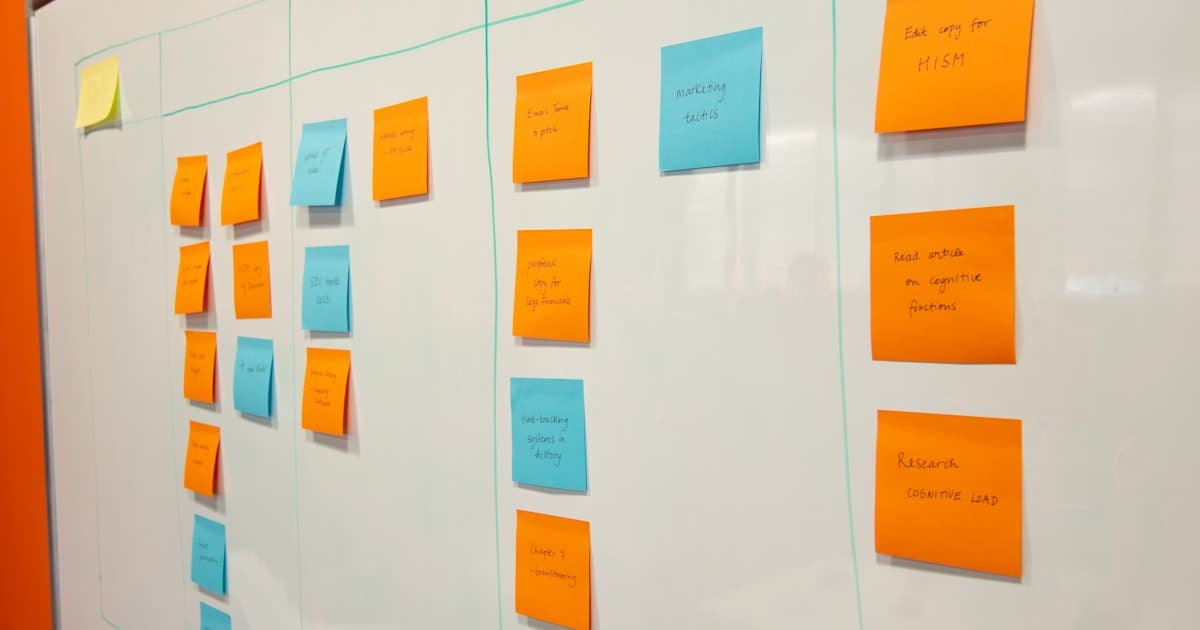
Among companies with 250 or more people, 10 per cent use AI for logistics. At companies with 50 to 250 people that is 3 per cent, and at the smallest companies 1 per cent. It is one of the application areas with the largest relative gap between large and small: large companies use AI here more than three times as often as mid-sized ones.
That gap is no coincidence. Planning is the domain where manual work and experience-based knowledge sit deepest, and therefore where resistance to change is greatest. This piece is about solving that without turning the planner who resists it into your biggest problem.
Why planning differs from other processes
Marketing copy and invoices have a clear right and wrong: the text is correct or not, the amount matches or not. Planning rarely has that. A schedule is good if it works, and whether it works depends on dozens of factors written down nowhere: which customer is flexible, which supplier always delivers late, which combination of orders is practical to schedule together.
That knowledge sits in the planner's head, built up over years, and is exactly why an AI system looking only at hard data proposes a schedule that is correct on paper and does not work in practice.
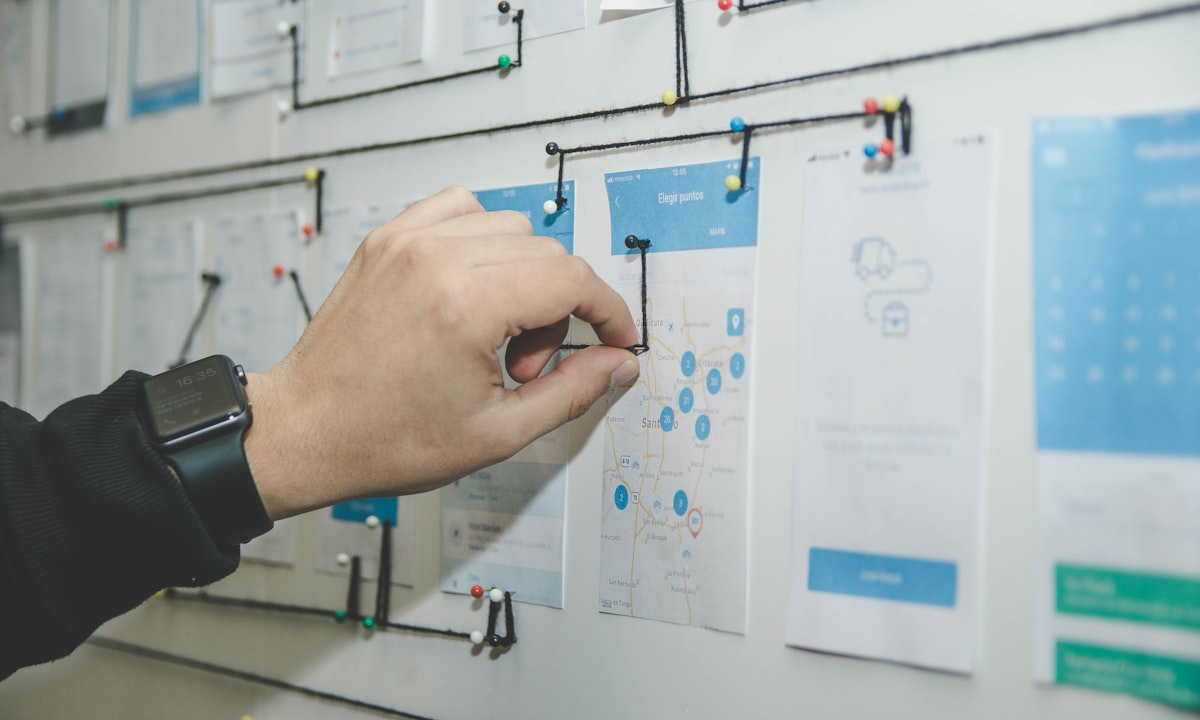 Working on a planning board. A schedule that looks right on paper does not always work.
Why the resistance here is greatest, and rightly so
A planner who has done this work for years has good reason to distrust a system trying to take over their experience. Two things make that distrust legitimate.
First: much of what a planner knows exists nowhere written down. A system looking only at historical data misses exactly the exceptions the planner already knows. Second: if it goes wrong, it is the planner who has to fix it, not the system. That person carries the risk of a mistake someone else automated.
That is why the story here cannot be about replacement, and why it has to be about making the planner better. See also our pieces on getting more out of the people you already have and building capacity without your own AI team: the same approach, applied to the function where resistance is greatest.
What does work: the model proposes, the planner decides
The pattern we see working with planning again and again is not automation but advice. A system proposing based on hard data, and a planner who can overrule that proposal within seconds based on knowledge the system does not have.
That overruling has to stay visible and not disappear into the system. A planner who knows their corrections are ignored in the next forecast stops correcting, and the system loses exactly the input it needed to get better.
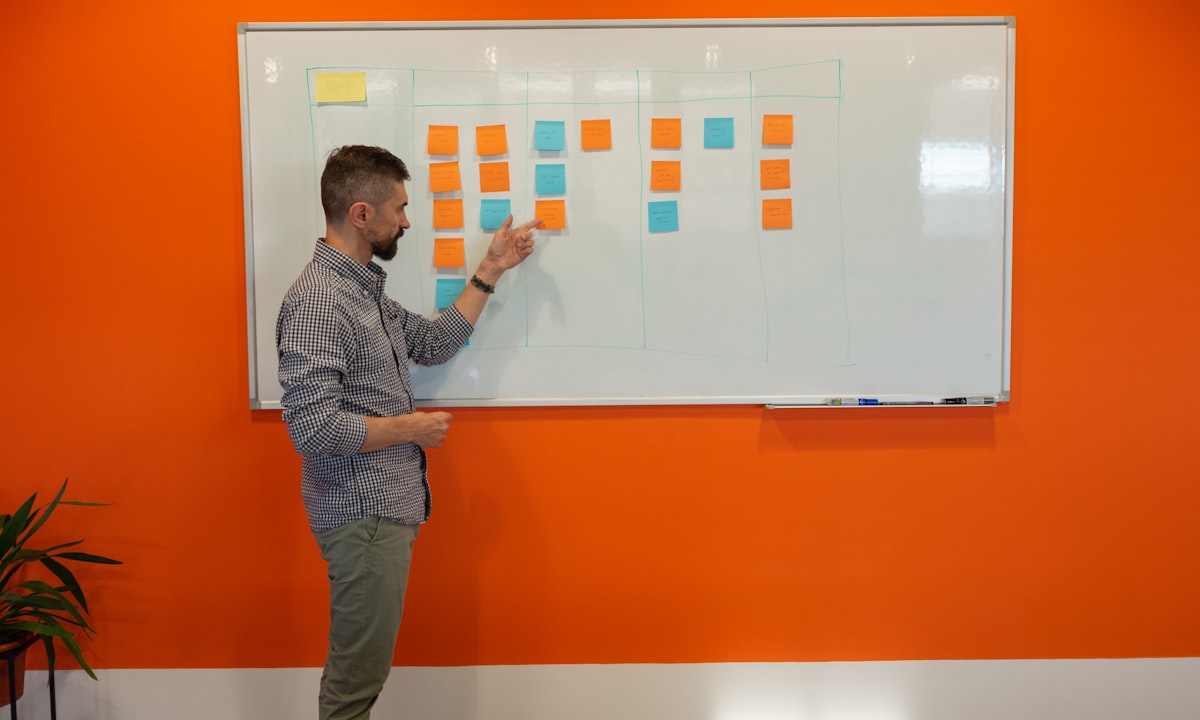 Explaining at a whiteboard. The model proposes, the planner decides.
Four steps to get this right
Involve the planner from day one, not as a tester afterwards. Someone who thinks along from the start about what the system should propose owns the outcome. Someone handed a finished system afterwards becomes a critic.
Start with proposing, not deciding. In the first months, have the system only make suggestions the planner accepts or rejects. Measure how often each happens and why.
Make overrides visible and use them as input. A planner's correction is not a system failure, it is a learning moment. A system that ignores overrides never learns the exceptions worth most.
Give the planner something back. If the system saves time, that time has to visibly return to the planner, not disappear into a target for more orders processed per hour. Otherwise working better gets punished instead of rewarded.
A concrete example of how advising works
Take a planner who has to allocate twenty orders across five machines daily. A system proposes an allocation based on lead time and availability. The planner sees that order seventeen is a customer expecting a much larger order next week, and moves that order to whichever machine frees up first, something nowhere in the system's data.
That move gets recorded, not ignored. After a few months the system recognises the pattern "large customer, small order, priority" without anyone programming it, simply because the planner kept showing it. That is the difference between a system learning from an expert and a system trying to replace one.
What the vendor should be able to show you
Ask any planning-system vendor for a demo where a human override is visibly processed, not just accepted. A vendor who cannot show that is probably building a system that plans without learning, and that is exactly the kind of system planners are right to resist.
What this delivers when it goes right
A planner spending less time manually entering standard cases keeps time for exactly the exceptions where their experience makes the difference. That is not a loss of status, it is a shift towards the part of the work where a human will always keep beating a model: the situation that has not happened before.
Companies that get this right do not see the planner become redundant. They see the planner become the person who trains, corrects and ultimately improves the system beyond what an external party could have built alone.
About this page
The figure on AI use in logistics by company size (1, 3 and 10 per cent) comes from the Statistics Netherlands ICT survey over 2025 and covers the whole economy, not one sector. This is the state of play on 21 August 2026.
Frequently asked questions
Sources
Tell us what you need.
We respond within 24 hours, from a real human.
Get in touch