Van AI-Foto naar roadmap: wat er in tien dagen gebeurt
"Hoeveel tijd kost mij dit?" is de eerste vraag die elke directeur stelt. Hier is het exacte antwoord, dag voor dag.

"Hoeveel tijd kost mij dit?" is de eerste vraag die elke directeur stelt, en het is een terechte vraag. De meeste antwoorden op die vraag zijn vaag: "een paar weken", "het hangt ervan af". Dit stuk geeft het exacte antwoord, dag voor dag, omdat het proces al op onze eigen site staat en niets om verborgen te houden heeft.
Het proces in twee weken
Het traject van AI-Foto naar roadmap duurt tien werkdagen, verdeeld over twee weken, met een vast tarief vanaf 3.900 euro.
| Dag | Wat er gebeurt | Wat het jou kost |
|---|---|---|
| 1 tot 3 | Digitale intake: je deelt context via een kort formulier | Een kwartier invullen |
| 4 tot 6 | Gesprekken met een handvol sleutelmensen uit je bedrijf | Een uur per gesprek, meestal drie tot vijf gesprekken |
| 7 tot 9 | Wij brengen kansen in kaart, rekenen ze door, stellen de roadmap op | Niets, dit is ons werk |
| 10 | Oplevering: we presenteren de diagnose en roadmap live op je kantoor | Een uur, met je hele MT erbij |
Opgeteld: een kwartier, drie tot vijf gesprekken van een uur, en een uur presentatie. Minder dan een dag verspreid over twee weken, voor een compleet beeld van waar je staat en wat je eerste stap wordt.
 Een gesprek aan tafel. Het deel dat het meest oplevert en het minst kost.
Waarom het geen langer traject hoeft te zijn
De reden dat dit in tien dagen kan, is dat de scan geen implementatie is. We bouwen in deze fase niets, we brengen in kaart wat er al is en wat het meeste oplevert. Dat is een andere activiteit dan een pilot draaien, en het vraagt dus een andere hoeveelheid tijd.
Een adviestraject dat weken aan workshops vraagt voordat er iets op papier staat, vraagt vaak niet meer tijd omdat het onderwerp complexer is. Het vraagt meer tijd omdat het proces zelf inefficiënt is ingericht. Zie ook ons stuk over waarom een adviesrapport geen capability is: een rapport dat maanden kost om te schrijven, is niet per definitie waardevoller dan een roadmap die in tien dagen tot stand komt.
Wat er in elke fase precies gebeurt
Dag 1 tot 3, de digitale intake. Je deelt via een kort formulier context over je bedrijf: omvang, sector, welke systemen je gebruikt, wat je opvalt aan je eigen manier van werken. Geen workshop, geen sessie, een kwartier werk dat je op een moment naar keuze invult.
Dag 4 tot 6, de gesprekken. We spreken een handvol sleutelmensen, meestal de directeur en twee tot vier mensen die het werk daadwerkelijk doen. Dit is het deel dat het meest oplevert en het minst kost: een uur per gesprek waarin we vragen naar frustraties, niet naar wensen. Zie ook waarom een AI-scan geen IT-project is: dit is precies waarom die gesprekken bij de directie beginnen.
Dag 7 tot 9, de analyse. Dit is ons werk, niet het jouwe. We brengen kansen in kaart op basis van wat we hebben gehoord, rekenen ze door op verwachte impact en haalbaarheid, en stellen de roadmap op. Je hoort hier niets van totdat het klaar is.
Dag 10, de oplevering. We presenteren de diagnose en de roadmap live op je kantoor, met je hele managementteam erbij. Dit is het moment waarop de rangorde van kansen, gebouwd op wat we in de gesprekken hebben gehoord, voor het eerst zichtbaar wordt.
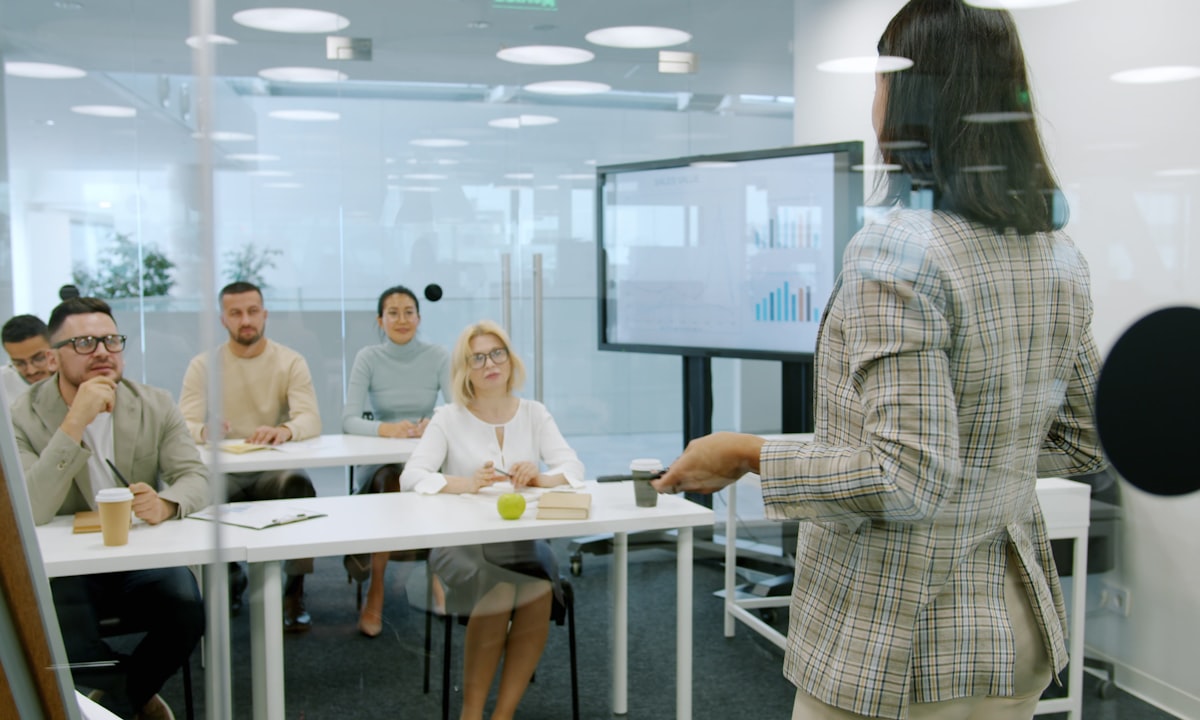 Presenteren aan een managementteam. Dag tien, live op kantoor.
Wat we vragen aan wie we spreken, en wat niet
De gesprekken op dag vier tot zes gaan bewust niet over AI. We vragen niet "wat zou je met AI willen doen", we vragen "welk deel van je werk kost de meeste tijd zonder dat het waarde toevoegt" en "waar loopt een goede collega vast op iets dat geen mens zou moeten doen". Die vragen leveren antwoorden op waar niemand zich tegen verzet, en ze leveren precies de input op waarmee we de roadmap bouwen.
Dat is ook waarom de gesprekken kort kunnen blijven. Een uur is genoeg om een aantal concrete frustraties boven tafel te krijgen, en meer heb je niet nodig om een rangorde van kansen te maken. Langere gesprekken leveren zelden meer bruikbare informatie op, ze leveren vooral meer tijd op die je kwijt bent.
Wat er gebeurt als je bedrijf groter of complexer is
Bij een bedrijf van driehonderdvijftig mensen met meerdere vestigingen kan het aantal gesprekken oplopen tot vier tot zes in plaats van twee tot vier, en dat past nog altijd binnen dezelfde tien dagen. Wat niet verandert is de opbouw: intake, gesprekken, analyse, oplevering. De schaal van het bedrijf verandert het aantal mensen dat we spreken, niet de doorlooptijd van het proces.
Wat er na dag tien gebeurt
De roadmap is geen eindpunt, het is een keuzemoment. Sommige bedrijven kiezen ervoor om er zelf mee aan de slag te gaan. Anderen kiezen voor een Capability Sprint, waarin we de eerste werkende toepassing samen bouwen met jouw mensen, op projectbasis.
Wat er niet gebeurt: een verkoopgesprek waarin je onder druk wordt gezet om door te gaan. De roadmap staat op zichzelf en is bruikbaar ongeacht wat je ermee doet.
Waarom dit tempo ook een signaal is
Een traject van tien dagen is niet alleen praktisch, het zegt ook iets over hoe we naar het werk kijken. Een proces dat maanden duurt voordat er iets concreets ligt, verliest vaart en aandacht binnen de organisatie. Tien dagen is kort genoeg dat de mensen die we spraken op dag vier tot zes zich nog herinneren wat ze hebben gezegd als de roadmap op dag tien wordt gepresenteerd.
Over deze pagina
De precieze indeling in dagen en de prijs vanaf 3.900 euro komen van onze eigen AI Readiness Scan-pagina. Dit is de stand van 24 augustus 2026.
Veelgestelde vragen
Bronnen
- Radical: de AI Readiness Scan, proces en tarief— radicalai.nl ↗
Vertel ons wat je nodig hebt.
Je krijgt binnen 24 uur antwoord van een echt mens.
Neem contact op